Thursday, October 21, 2010

Safe Harbors of the Hudson: Cornerstone Residence

"Safe Harbors of the Hudson, incorporated in 2000, is a nonprofit organization that is committed to transforming lives and building communities through housing and the arts in the City of Newburgh."


This week, I had a chance to see what is within the walls of the old Hotel Newburgh. Renamed "The Cornerstone Residence", this space now offers supportive housing, and this probably the exact opposite of what you think of when "affordable housing" comes to mind. I didn't see any of the actual apartments, but I had met a Cornerstone resident on a previous occasion, and he had mentioned how much he loved his place, with the high ceilings, hardwood floors, etc. Although this is nothing like the old Hotel Newburgh, you'd find many amenities available in hotels today. Some of these features include a fitness room (complete with a meditation room), library, computer lab, and rooms for group events.

After signing in with security and entering the lobby, you're surrounded with artwork from one resident artist. The artwork changes monthly, where a different resident's work is featured each month, and its almost a shame that this isn't visible to the general public (some of the residents do have works displayed at the Newburgh Free Library, if interested in viewing some of the talent residing here). The lobby being so spacious, there was so much more than I had a chance to look at in the brief period I was waiting there. This month, the walls were adorned with paintings from "Tusay". While seeing the artist studios, Tusay was painting away- the art being displayed is only a fraction of his inventory. While down there (in what used be be part of the Sears automotive department) he was more than happy to show me more of his work and was sweet as can be. I'm lucky to have the Cornerstone and its residents in my neighborhood!


Tusay sporting his "Ritz Kidz" t-shirt


Monday, October 18, 2010

Cindy Cashdollar And Steve James Perform At The Ritz Theater


On Saturday, October 16, 2010, the Ritz Theater and La Bella Strings (which is actually based in Newburgh), in association with the Bardavon, welcomed Cindy Cashdollar and Steve James. The concert is a part of the 2010-11 Tom Humphrey Guitar Series.


Cindy Cashdollar is one of the foremost steel and dobro players in the country and has collaborated with everyone from Bob Dylan to Rod Stewart.


Steve James is a well known name among devotees of contemporary acoustic folk and blues.


Thursday, October 14, 2010

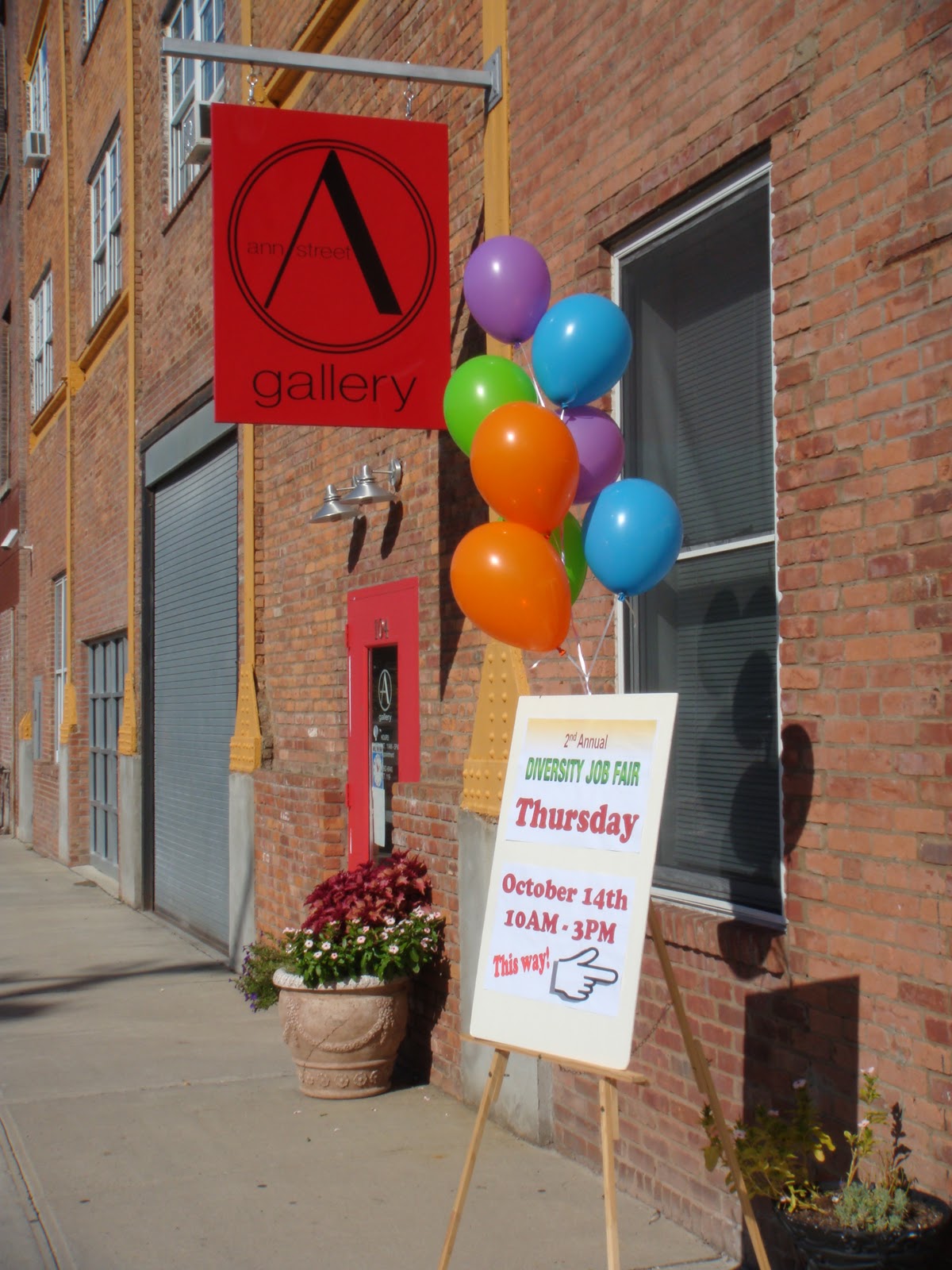
New Opportunities Just Around The Corner, at The Cornerstone


I just happened to be in the neighborhood today, and me being me, had to wander around the area aimlessly. I saw the sign for a job fair around the corner, and just checked it out.

Independent Living Inc. is sponsoring the Diversity Job Fair, and it was in a beautiful setting, being held at the Green Room at The Cornerstone, and had a large variety of participants attending. Such participants include the following (in no particular order and may not be all inclusive):

Check it out if you happen to be in the neighborhood!

    Friday, October 8, 2010

    Touring Newburgh

    Two weeks ago, when I attended the "Hudson Valley Ruins" lecture at the Newburgh Free Library, I met a lady briefly at the end of the event, and she was more than enthusiastic on sharing what Newburgh had to offer with me. She gave me her phone number, with the idea of her showing me around the area.


    I gave her a call, and after a couple of rounds of phone tag, we met up at the Captain David Crawford House, home to the Historical Society of Newburgh Bay and the Highlands. The house itself is something worth seeing, from the ornate front door with its antique hardware, to it being situated on a corner lot overlooking the Hudson River.


    This lady, being a Newburgh native and holding a seat on the Historical Society's Board of Managers, was a wealth of information. I could ask her just about anything, and she gladly answered. If she felt she didn't have enough information, she was more than happy to the contact information of someone to get in touch with. She took  me all over Newburgh, pointing out houses and different neighborhoods, and providing information on each unique area, whether it be relating to the types of houses, architects involved, or the general use of the areas today. What I liked best was the fact that she didn't try to sugarcoat anything, or avoid places you probably wouldn't want someone to judge the area on. In fact, I think those areas are the best to see.

    Aside from just wanting to get to know the area more, she also pointed out how many things there are to do in the area, reasons to just come spend a few hours or even a day there, such as the Ann Street Gallery, the Karpeles Manuscript Library, the Downing Film Center, and the Ritz Theater. Other places not to be left off the list of to-do's here are the restaurants and shops on Liberty Street and the Waterfront area. A friendly stop at Newburgh Art Supply and lunch at Caffé Macchiato were also on our itinerary.

    What she really showed me is that the true essence of the area isn't in the historic buildings or quaint shops, but the people in the community. I can't even say how I came to talking to to her that night, but she went above and beyond making someone new feel welcomed.

    Monday, October 4, 2010

    Heating Up


     It's damp outside, there's a chill in the air, and heat comes to mind. I can already imagine that faint smell of the dust burning off the baseboards (no, I don't move the furniture and vacuum the elements of the baseboard heaters). One thing I want at home is radiant heat, which we installed as part of this project.

    The hallways seemed narrow, but needed to be heated. For brief moments, I wondered if we really needed to heat those small areas, but after spending some cold days there, there was no doubt the halls needed heating. Baseboards seemed clunky and I just envisioned them getting trashed in no time, with things being moved in and out and trying to maneuver those tight spaces. We went with the option of underfloor heating, running PEX tubing (polyethylene), over the sub floor and under the tile, throughout the halls and in the basement.


    Installation starts out with prepping the sub floor with moisture barriers and wire mesh. They are rolled out to cover the sub floor surface, similar to the way carpeting is laid out. Next came the rolls of PEX tubing. This starts out as a neatly rolled coil and ends up looking like a big mess of spaghetti as you work with it. As it is being unraveled, the tubing is placed over the grid in loopy snakelike patterns and is secured to the grid with tie wraps, so the tubing will lay flat in the placement pattern.


    After, a layer of cement is poured, in order to provide a level surface to install the floor on. From there, floor installation proceeds as usual. I don't know the technical aspects of feeding this into the heating unit (this is where a plumber's expertise comes in), but some sort of a fluid is cycled through the tubes, which are then connected to the boiler. The result is an evenly heated area, without signs of any heaters in sight.


    For me, the benefits are no baseboards getting in your way, having a nice toasty feel wherever you are, since the heat is laid under the entire area (rather than a heater running along one wall of the room), and no scent of burning dust. Now if only I get this installed at home...

    Monday, September 27, 2010

    Hot or Cold?

    As the seasons change, it’s hard to decide whether it's hot or cold. One minute, I have the windows open, the weather being just perfect, another I'm turning on the air conditioning, and even within the same day, I can be switching the heat on. I have the same battles with my husband- I up the temperature, he likes it lower, he's opening the windows to enjoy the breeze, I'm closing them to block out the cold flow. If I can't decide myself, or the two of us can't agree on what's comfortable, how could we expect a couple of apartments to be equally comfortable?


    With that in mind, we installed tankless water heaters, which control both the heating of the apartment and the hot water for that individual apartment. Quietside makes on-demand water heaters, which means the hot water is heated as it is needed, and there is no bulky water tank sitting in a far off corner or basement, taking up space you could be using for something else. Another plus with an on-demand system is that you don’t run out of hot water, as opposed to a water tank that holds only so many gallons of water at a time. Ever end up with a cold shower because someone else spent a little too much time in their hot shower? With these heaters, it’s not an issue- hot water can flow all day and night without worry.

    Although these turn out to be more energy efficient in the sense that you aren’t paying to keep water hot all the time, whether you use it or not, that wasn't the biggest selling point for us. What we liked the most is that this controls the heat as well. Each unit was set up with one of these boilers, and a thermostat was placed in each apartment. One person could keep their thermostat at a temperature equivalent to those in the tropics, while another could enjoy the brisk winter temperatures if they wanted. Also, by splitting the heating systems by apartment, we could have each apartment responsible for their heating costs. If you drive around the city in the winter, you can always tell who pays for heat and who doesn’t. I’ve seen windows open as far as they can in the dead of winter, so someone somewhere is paying to heat the outdoors. With our set-up, if someone chooses to do so, it’s at their own expense, and you’d be surprised at how much more they are aware of those expenses.


    After several years of having these units installed, I’ve found them to be low maintenance, but these units like to be worked. We left one apartment empty for about two years, so the heat was set to a “vacation mode”, which turns off the heat, but triggers a safeguard setting to prevent the pipes from freezing if the outside temperature suddenly drops, and when we went to start it up, it was a little temperamental, but after a few minor adjustments and just letting it run, it works great.

    Another drawback is that some of the controls on the thermostat are too advanced for people who are not used to controlling the heat, with different setting for the summer months, options to turn the system off altogether, and economy modes where you can automatically lower the heat at a set time and have it warmer at a later time (for example, when you leave for work, you’d have the temperature lowered slightly, and then have it programmed to raise the temperature around the time you usually come home, this way you aren’t paying to heat an empty place all day). When we get a new tenant we tend to get a call at some point about the heat not working, but that’s easily fixed with the turn of a switch.

    Regardless of what each person decides their ideal temperature is, I’m not caught in the middle. I’m still trying to figure out if I want the heat on or off myself…

    Friday, September 24, 2010

    Touring Hudson Valley Ruins Without Ever Leaving The Newburgh Free Library


    Robert J. Yasinsac, a graduate of SUNY-Oswego, is the Site Manager at the Union Church in Pocantico Hills, N.Y., and a Museum Associate at Philipsburg Manor in Sleepy Hollow, NY, both properties of Historic Hudson Valley. He serves as a Trustee on the Board of the Irvington Historical Society.


    All from a chair at the Newburgh Free Library, a number of people got to explore "Hudson Valley Ruins". Through both current and vintage pictures, we were taken to places like Wyndclyffe (in Rhinebeck), the Briarcliff Lodge (Briarcliff Manor), West Point Foundry (Cold Spring). We toured brickyards and cement factories, saw long lost pictures of the Edward J. Cornish Estate (Cold Spring). We were provided with examples of possible modern day uses of structures like the Yonkers Power Station (Yonkers) and looks inside Bannerman’s Island Arsenal/Pollepel Island. Of course, Newburgh's very own Dutch Reformed Church and West Shore Railroad Station were part of the evening.


    Robert J. Yasinsac, preservationist and co-author (Thomas Rinaldi, the other half of this team, was unable to attend) of  Hudson Valley Ruins: Forgotten Landmarks of an American Landscape, provided us with a free lecture, answered questions people had, and signed copies of his book. Mr. Yasinsac also authored a book titled "Images of America - Briarcliff Lodge" (Arcadia Publishing), spotlighting what was once considered America's premier resort hotel.


     As a bonus, I had an unplanned meeting with a new Facebook friend and exchanged information with another lady, who I plan to call to find out more about this great city!


    Thank you to Chuck Thomas (Outreach Services) of the Newburgh Free Library for being our gracious host.